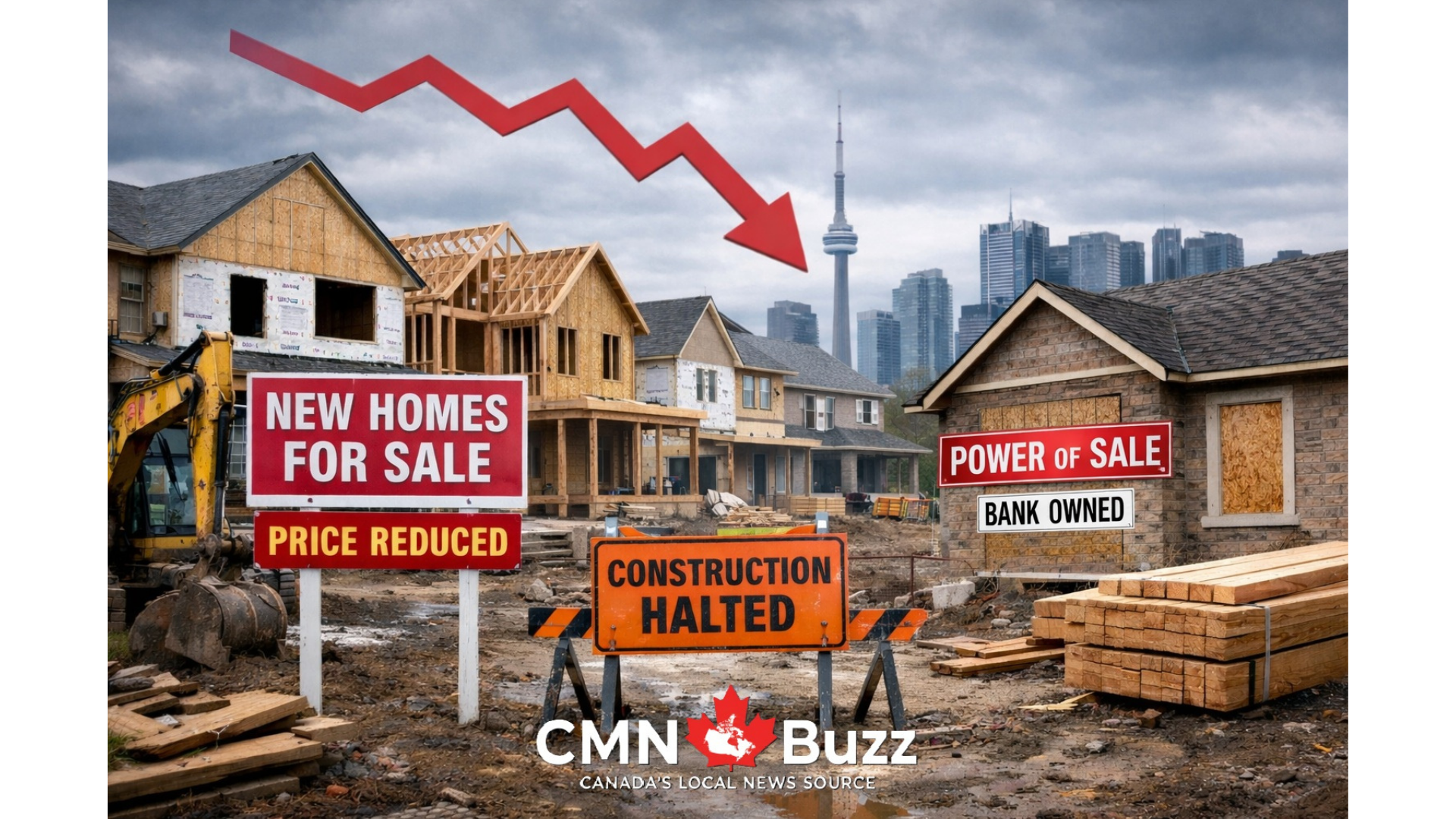
Canada: Canada is facing a historic housing emergency that extends far beyond its major metropolitan hubs. Recent data reveals a staggering collapse in new home sales, with the Greater Toronto Area recording its worst performance in over 45 years. However, this is not just an Ontario problem. From the skyrocketing costs in British Columbia to the cooling markets in Alberta, the dream of homeownership is becoming increasingly unattainable for many Canadians as the construction industry hits a critical breaking point.
A National Downturn
While Toronto often dominates the headlines, the current housing crisis is a nationwide phenomenon. New home sales have plummeted across Ontario, with cities like Kitchener, Waterloo, and Cambridge seeing a nearly 90% drop in transactions. Similar trends are emerging in other major Canadian markets like Calgary and Edmonton, where the cost of building new units has risen so sharply that builders can no longer compete with the existing resale market. In the Greater Golden Horseshoe area, condo apartment starts have fallen by 51%, a clear indicator that developers are shelving projects indefinitely.
Why are Costs so High?
According to industry leaders at the Residential Construction Council of Ontario (RESCON), the crisis is decades in the making. It is the result of a “perfect storm” of factors: overly restrictive zoning policies, agonizingly slow municipal approval processes, and excessive red tape. Furthermore, exorbitant government taxes and development charges now account for a significant portion of the cost of a new home. In many Canadian jurisdictions, nearly 30% of the price of a new house goes directly to various levels of government in the form of taxes and fees.+1
The Economic Ripple Effect
The slowdown in construction does not just affect potential homebuyers; it threatens the broader Canadian economy. Current forecasts suggest a 36% decrease in housing starts compared to the ten-year average. This persistent slowdown could potentially displace upwards of 35,000 residential construction workers in Ontario alone, with thousands more at risk across the country. If the machines stop moving and the shovels stay out of the ground, the economic spinoffs—ranging from manufacturing to retail—will see a significant decline.
Government Response and the Road Ahead
While provincial leaders like Premier Doug Ford have acknowledged the severity of the situation, experts argue that current measures are mere “half-measures.” While the removal of the provincial portion of the HST on purpose-built rentals and new infrastructure funding are steps in the right direction, they are not enough to break the “Gordian Knot” of the housing crisis.
Industry experts are calling for a coordinated, “all-guns-firing” approach from federal, provincial, and municipal governments. Key recommendations include:
- Drastic Tax Cuts: Slashing sales taxes and development charges for all new homebuyers to make projects financially viable again.
- Accelerated Approvals: Overhauling the bureaucratic process to get projects approved in months rather than years.
- Infrastructure Investment: Significant funding for roads, bridges, and water systems to support new housing developments.
The housing outlook remains grim, and as economists suggest, things may get worse before they get better. For Canadians waiting on the sidelines to buy their first home, the message is clear: without radical policy changes to lower construction costs, the supply of new housing will continue to dry up, keeping prices high and the market out of reach for the average family.
Share your thoughts and questions about this news in the comment box below. For more information, visit our website or email us at cmnbuzzcanada@gmail.com. Follow CMN Buzz on social media to stay updated with all major news from Canada in real-time.
Stay tuned to CMN Buzz — Your trusted partner for news that shapes the future of immigrant life in Canada