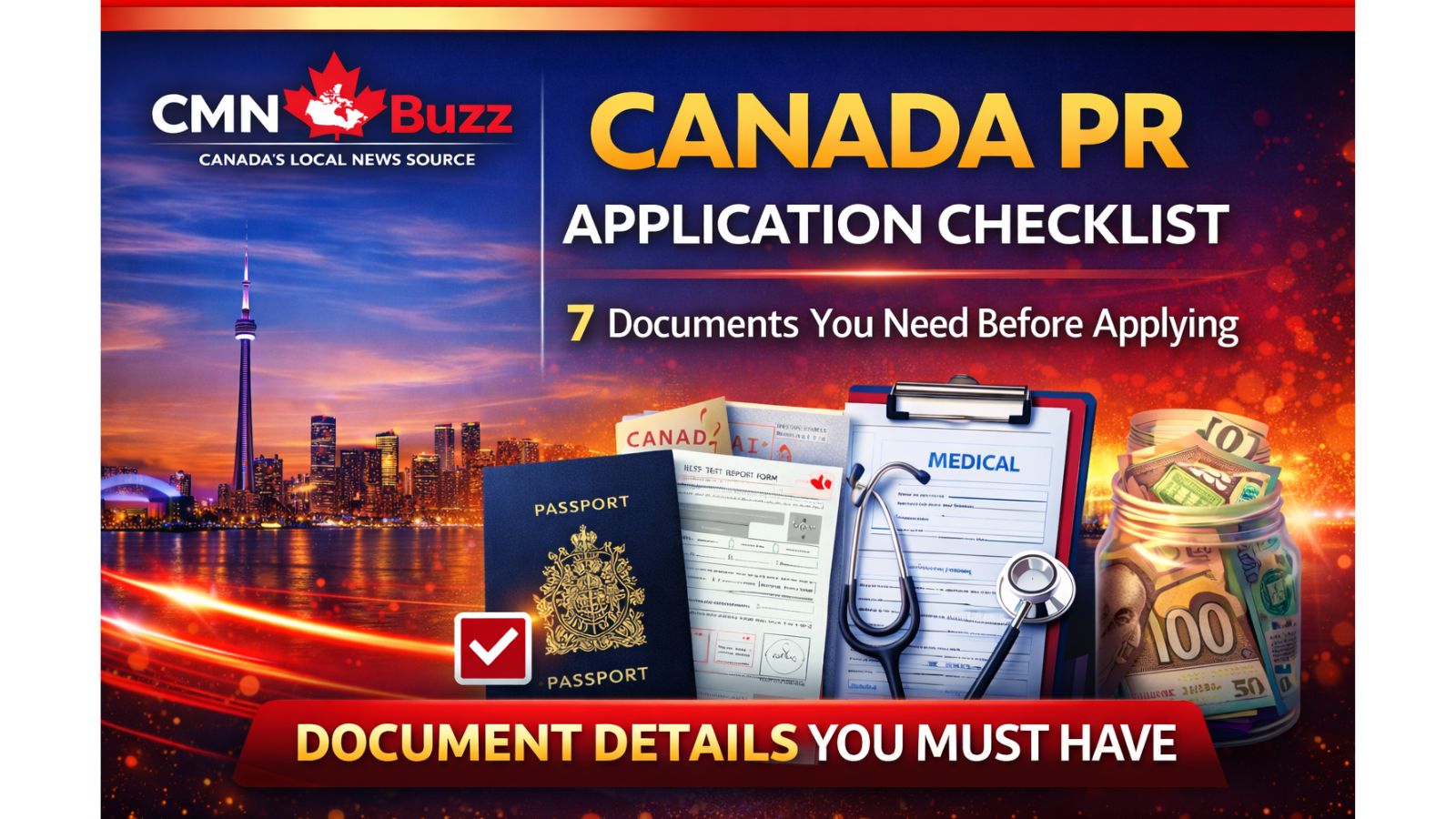
Applying for permanent residency in Canada is an important step for many temporary residents, international graduates, and skilled workers who want to build a long-term future in the country. While immigration pathways such as Express Entry, Provincial Nominee Programs (PNPs), and other federal programs offer opportunities for eligible candidates, the success of a PR application often depends on how well applicants prepare their supporting documents.
Canada’s immigration department, Immigration, Refugees and Citizenship Canada (IRCC), carefully reviews every application to confirm identity, education, work experience, financial stability, and security background. Missing documents or incomplete information can lead to delays, additional requests, or even refusal in some cases. Preparing the right documentation in advance can make the process significantly smoother and help applicants avoid unnecessary complications during the application review.
For individuals planning to apply for permanent residence, understanding which documents are required and why they matter is an important first step in the preparation process.
Why Documents Matter in a Canada PR Application
Proper documentation plays a critical role in Canada’s immigration system. IRCC uses submitted documents to verify that applicants meet eligibility requirements under specific immigration programs. These documents provide evidence of identity, qualifications, employment history, and compliance with Canada’s health and security standards.
When documents are incomplete, outdated, or inconsistent with the information provided in the application profile, immigration officers may request additional clarification. In some situations, the processing time can increase significantly while the officer waits for updated information.
Because of this, many immigration advisors recommend preparing a complete checklist of documents before starting a PR application. Having the correct documents ready can help applicants submit accurate information and reduce the risk of processing delays.
Valid Passport
A valid passport is the primary identity document required by IRCC for a Canadian permanent residence application. Every applicant included in the file must have a passport that remains valid during the application process.
Applicants are usually required to upload scanned copies of the passport’s identification page and any pages containing visas, stamps, or travel history. If family members are included in the application, each person must provide their own passport information as part of the submission.
Ensuring that passports are valid and clearly scanned before uploading can help prevent technical issues during the online application process.
Language Test Results
Language proficiency is a key requirement in most Canadian immigration pathways. Applicants must demonstrate their ability to communicate in English or French through approved language tests.
For English, the most commonly accepted tests include IELTS General Training and CELPIP General. French language ability can be demonstrated through exams such as TEF Canada.
Language scores are particularly important for applicants using the Express Entry system because they directly affect the Comprehensive Ranking System (CRS) score. Higher language scores can significantly improve an applicant’s chances of receiving an invitation to apply for permanent residence.
Most language test results remain valid for two years, so applicants should ensure their test scores are still valid when submitting their PR application.
Educational Documents and ECA Report
Applicants who completed their education outside Canada must obtain in many immigration programs an Educational Credential Assessment (ECA). The ECA confirms that foreign educational credentials are equivalent to Canadian education standards.
Organizations such as World Education Services (WES) are authorized to conduct these assessments. Applicants must submit copies of their degree certificates, transcripts, and ECA reports when required under immigration programs such as Express Entry.
Education can also contribute to an applicant’s CRS score. Because of this, properly documented educational credentials can play an important role in strengthening a PR application.
Work Experience Documentation
Work experience is another major component of many Canadian immigration programs. Applicants must provide evidence of their professional background to demonstrate that they meet the eligibility requirements of skilled worker programs.
Common documents used to verify employment include official reference letters from employers, employment contracts, pay stubs, and tax documents. Reference letters typically include details such as job title, employment period, responsibilities, and salary information.
Accurate work documentation is especially important for Express Entry applicants, since work experience contributes to CRS points and helps immigration officers confirm that applicants meet program requirements.
Police Clearance Certificates
Police clearance certificates are required to confirm that applicants do not have a serious criminal history that would make them inadmissible to Canada.
Generally, applicants must provide police certificates from every country where they have lived for more than six months since the age of 18. The process for obtaining these certificates varies depending on the country.
Because some countries may take longer to issue police clearance documents, many applicants choose to start this process early to avoid delays when submitting their PR application.
Medical Examination Report
Medical examinations are a mandatory part of the Canadian immigration process. Applicants must undergo a health examination conducted by an IRCC-approved panel physician.
The purpose of the medical examination is to ensure that applicants do not have health conditions that could pose a risk to public health or place excessive demand on Canada’s healthcare system.
In most cases, the medical examination results are submitted directly to IRCC by the approved physician after the examination is completed.
Proof of Funds
Some immigration programs require applicants to demonstrate that they have sufficient financial resources to support themselves and their family members after arriving in Canada.
Proof of funds is typically provided through bank statements, official letters from financial institutions, or other financial records that show available savings. The minimum required amount depends on the size of the applicant’s family and the immigration program under which they are applying.
Applicants should carefully review the financial requirements of their chosen program to ensure that they meet the current proof-of-funds guidelines.
Additional Documents for Express Entry Applicants
Applicants applying through the Express Entry system may also need to provide additional documents depending on their personal profile. For example, employment reference letters must clearly describe job responsibilities that match the National Occupational Classification (NOC) category claimed in the application.
Supporting documents such as tax records, salary slips, and employment verification letters may also be required to confirm work history. Because Express Entry is a points-based system, properly documented information can significantly strengthen an application and reduce the risk of document-related issues during processing.
Common Document Mistakes to Avoid
One of the most common reasons for delays in PR applications is documentation errors. These mistakes can include expired language test results, incomplete work reference letters, or uploading documents in incorrect formats.
Applicants should carefully review the document checklist provided by IRCC and ensure that all files are clearly scanned, properly labeled, and uploaded in the required format. Double-checking every document before submission can help prevent unnecessary complications later in the process.
Preparing immigration documents in advance may take time, but careful preparation can make the overall application process more efficient. Having all required documents organized before submitting an application allows applicants to move forward with greater confidence.
For many people, obtaining Canadian permanent residence represents an important step toward long-term stability, career opportunities, and life in Canada. Taking the time to prepare the necessary documents carefully can help ensure that the application process moves forward smoothly.
For a Malayalam news perspective on this topic, read the full report here.
Share your thoughts and questions about this news in the comment box below. For more information, visit our website or email us at cmnbuzzcanada@gmail.com. Follow CMN Buzz on social media to stay updated with all major news from Canada in real-time.
Stay tuned to CMN Buzz — Your trusted partner for news that shapes the future of immigrant life in Canada