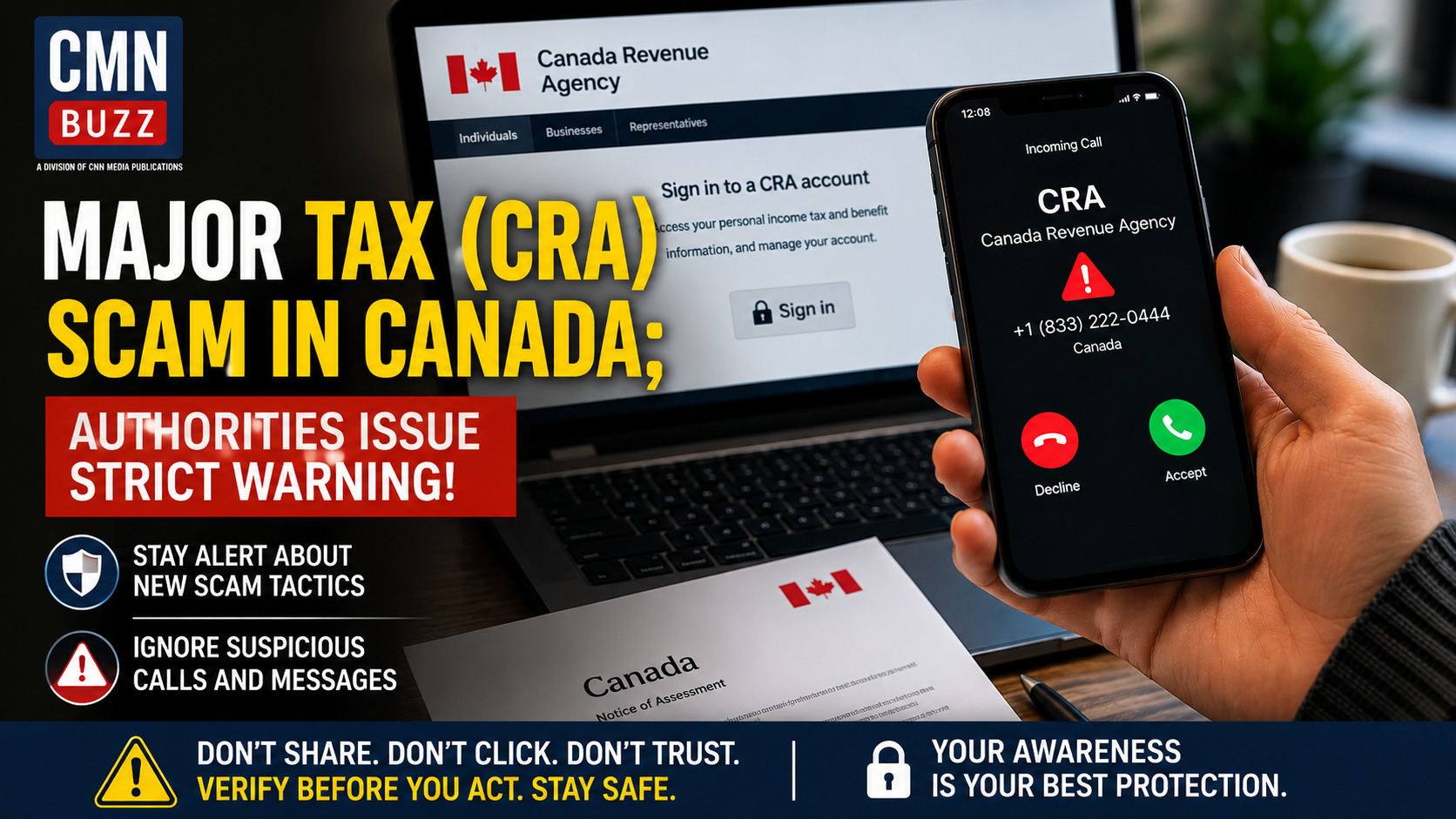
Canadians searching for information about CRA scam calls, fake tax refund messages, and identity theft risks in Canada are being warned to stay alert as fraud attempts continue to increase across the country. Cybersecurity experts and federal authorities say scammers are becoming more sophisticated, using fake phone numbers, AI-generated voices, and convincing text messages to trick people into sharing personal and financial information.
The Canada Revenue Agency (CRA) has repeatedly warned that fraudsters are impersonating government officials through phone calls, emails, text messages, and social media. Many of these scams create fear and urgency by claiming that the recipient owes money, is under investigation, or is eligible for a tax refund that requires immediate verification.
Authorities say newcomers, international students, seniors, and first-time tax filers are among the most targeted groups because many people may not fully understand how official CRA communication works in Canada.
How CRA Scams Usually Work
Most CRA impersonation scams follow a similar pattern. Victims receive a phone call, email, or text message pretending to be from the CRA. The message often claims:
- A tax refund is waiting
- Taxes are overdue
- A Social Insurance Number (SIN) has been suspended
- Legal action or arrest could happen
- Immediate payment is required
Scammers then pressure victims into acting quickly before they have time to verify the information. Some fraudsters direct people to fake websites that closely resemble official government portals, while others request payment through gift cards, cryptocurrency, prepaid cards, or e-transfer services.
According to the CRA, these payment methods are major warning signs because the agency does not request payments through gift cards or cryptocurrency.
Fake Text Messages and Refund Links Increasing
Text-message scams have become increasingly common in Canada. Victims may receive messages claiming they are eligible for a tax refund and must click a link to claim it. These links often lead to phishing websites designed to steal banking credentials, passwords, or identity documents.
Cybersecurity experts warn that these fake refund links can look highly convincing, especially on mobile devices where people may not carefully check website addresses.
Many scam messages also use official logos, government language, and urgent wording to appear legitimate.
AI Voice Scams Are Creating New Risks
Authorities are also warning about AI-generated voice scams that imitate government representatives or automated phone systems. In some cases, scammers use artificial intelligence to create realistic voices that sound professional and trustworthy.
Experts say these scams are becoming harder to detect because fraudsters can now mimic accents, speaking styles, and official-sounding automated recordings. Caller ID spoofing is another growing concern, allowing scammers to make calls appear as though they are coming from legitimate CRA phone numbers.
Because of this, officials say Canadians should never trust caller ID alone as proof that a call is genuine.
What the CRA Will Never Ask You To Do
The CRA has outlined several important signs that can help people identify fraudulent communication.
The agency says it will never:
- Demand payment using gift cards or cryptocurrency
- Threaten immediate arrest or deportation
- Send refund claim links through text messages
- Pressure people into immediate action during a phone call
- Ask for passwords through email or text
- Demand payment through prepaid credit cards or wire transfers
If any message or caller uses fear, urgency, or aggressive language, experts recommend ending communication immediately and verifying information independently through official government channels.
What To Do If You Receive a Suspicious Call or Message
If you receive a suspicious call, email, or text pretending to be from the CRA, experts recommend taking the following steps:
- Do not click links or open attachments
- Do not share banking information or SIN details
- Hang up if the caller becomes threatening
- Verify your account directly through the CRA My Account portal
- Contact your bank immediately if information was shared
- Report the scam to the Canadian Anti-Fraud Centre
Cybersecurity professionals also recommend enabling two-factor authentication on banking and government accounts whenever possible.
Why Newcomers and Students Are Frequently Targeted
Immigrants and international students are often specifically targeted because scammers know many people are unfamiliar with Canadian tax procedures and government systems. Fraudsters frequently use fear tactics involving visa status, immigration records, or legal action to pressure victims into making payments quickly.
Community organizations across Canada continue to encourage newcomers to learn how official government agencies communicate and to verify all unexpected messages independently.
Public Awareness Remains the Best Defense
Financial fraud and identity theft scams continue to evolve in Canada, especially during tax filing periods when people expect communication from the CRA. Experts say public awareness remains one of the most effective ways to reduce the number of victims.
Authorities encourage Canadians to speak openly with family members, especially seniors and students, about scam risks and online safety. Sharing verified information and understanding common warning signs can help prevent financial losses and identity theft incidents.
As fraud tactics become more advanced, officials say Canadians should slow down, verify information carefully, and avoid reacting emotionally to urgent demands involving taxes or government agencies.
For a Malayalam news perspective on this topic, read the full report here.
BQ | CMN BUZZ
Editorial Team
Share your thoughts and questions about this news in the comment box below. For more information, visit our website or email us at cmnbuzzcanada@gmail.com. Follow CMN Buzz on social media to stay updated with all major news from Canada in real-time.
Stay tuned to CMN Buzz — Your trusted partner for news that shapes the future of immigrant life in Canada