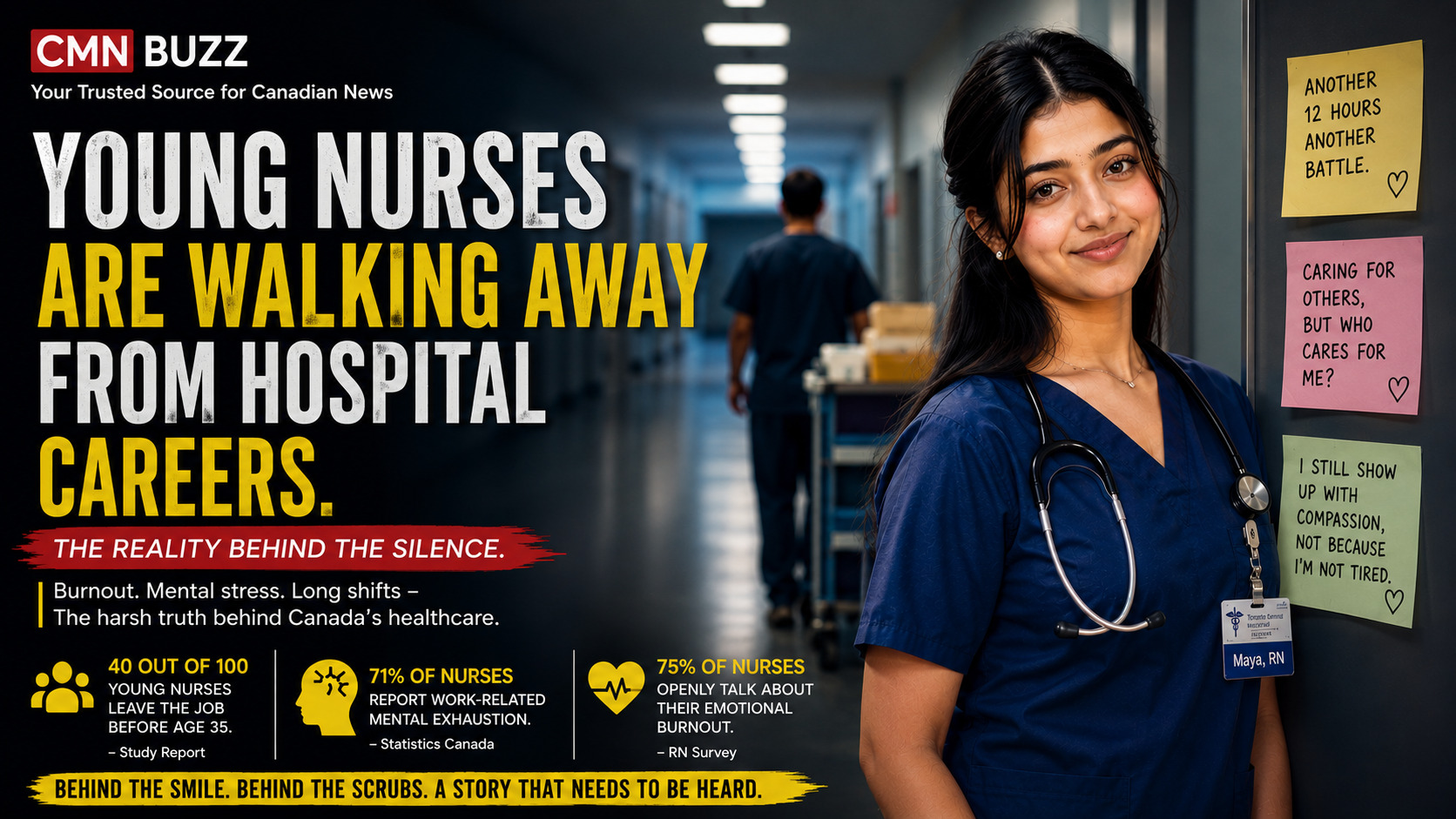
Canada’s nursing crisis is becoming emotional, personal, and impossible to ignore
Across Canada, a growing number of young nurses are quietly walking away from hospital careers that once represented stability, purpose, and financial security.
For years, nursing was viewed as one of the safest and most respected professions in the country. Strong salaries, job stability, overtime opportunities, and immigration pathways attracted thousands of people into the healthcare system. Many believed the profession would provide a meaningful career along with long-term financial stability.
But behind the professional image and public respect, many nurses say the emotional reality of the job is far more difficult than they expected.
From emotional exhaustion and constant understaffing to anxiety before shifts and burnout after long hospital hours, Canada’s younger nursing generation is increasingly questioning whether they can continue in the profession long-term.
A Growing Number of Young Nurses Are Leaving
Healthcare experts and workforce studies have raised growing concerns about the number of younger nurses leaving the field early in their careers.
Recent Canadian workforce reports found that for every 100 nurses under the age of 35 entering the workforce, approximately 40 leave the profession before reaching mid-career. Healthcare organizations across Canada say burnout, emotional fatigue, and poor work-life balance are major reasons behind the trend.
Statistics Canada has also reported high levels of stress among healthcare workers, with nurses consistently ranking among the most emotionally exhausted professions in the country. Surveys conducted after the COVID-19 pandemic showed many nurses experiencing severe mental fatigue, sleep problems, emotional numbness, and increased anxiety connected to work.
The issue is no longer isolated to a few hospitals or provinces. Nurses across Ontario, British Columbia, Alberta, and other provinces continue speaking publicly about burnout and emotional pressure inside Canada’s healthcare system.
The Career Many Thought Would Guarantee Stability
For many young people entering the profession, nursing initially appeared to offer a secure future.
High-paying salaries, healthcare demand, overtime opportunities, and the ability to build a stable life in Canada made the profession extremely attractive. International students and immigrants also viewed nursing as one of the strongest pathways toward permanent residency and long-term settlement in Canada.
However, many younger nurses now say the reality of the profession feels very different from what they imagined.
Instead of structured work-life balance and emotional fulfillment, many describe overwhelming workloads, constant pressure, and emotional exhaustion.
Some nurses say they regularly work shifts where they barely have time to eat or drink water. Others describe sitting silently in their cars before entering the hospital, mentally preparing themselves for another difficult shift.
What many expected to be a respected and emotionally rewarding profession has, for some, become a source of chronic stress.
Burnout Is Becoming Part of Daily Life
The emotional weight of nursing often extends beyond physical exhaustion.
Many hospital nurses work 12-hour shifts that frequently stretch longer because of staffing shortages and patient demand. Emergency rooms and hospital units across Canada continue struggling with worker shortages, increasing the pressure placed on remaining staff.
Nurses describe:
- Constant overtime
- Emotional fatigue
- Verbal abuse from patients or families
- Anxiety before shifts
- Sleep disruption
- Missing family events and personal time
- Feeling emotionally disconnected after work
Some younger nurses say they no longer feel emotionally present in their daily lives because the job drains so much of their mental energy.
Social media has also become a place where nurses openly share their experiences. Videos discussing “nursing burnout,” “night shift anxiety,” and emotional exhaustion regularly receive millions of views online.
These stories are resonating because many Canadians are beginning to understand that healthcare workers are carrying emotional pressure far beyond what most people see during a hospital visit.
Why Gen Z Nurses Think Differently
Younger nurses are also approaching work differently than previous generations.
Many Gen Z workers place stronger importance on mental health, work-life balance, and personal wellbeing. Unlike older workplace cultures where emotional suffering was often normalized, many younger healthcare workers are more willing to question unhealthy work environments.
This has created a growing cultural divide inside healthcare.
Older generations often viewed burnout as something that simply came with the profession. Younger nurses are increasingly asking whether sacrificing their physical and emotional wellbeing should be considered normal.
As a result, many are leaving bedside hospital work entirely.
Some move into:
- Cosmetic nursing
- Private clinics
- Travel nursing
- Virtual healthcare roles
- Administrative healthcare positions
- Content creation and wellness-related careers
Others are leaving healthcare altogether.
Canada’s Healthcare System Could Feel the Impact
The emotional burnout affecting nurses is not only a personal issue — it could become a major national healthcare problem.
Canada already faces growing healthcare worker shortages in several provinces. Emergency room wait times remain high in many regions, while rural communities continue struggling to maintain adequate staffing.
If younger nurses continue leaving hospital work at current rates, healthcare experts warn that staffing shortages could become even more severe in the coming years.
An aging Canadian population is expected to increase healthcare demand significantly over the next decade. At the same time, many experienced nurses are approaching retirement age.
That means Canada may soon face a dangerous situation where healthcare demand rises while fewer younger workers remain willing to stay in the profession long-term.
Many Nurses Still Love Caring for People
Despite the emotional challenges, many young nurses say they still deeply care about helping patients.
For many, the decision to leave is not about laziness or lack of compassion. Instead, it is about emotional survival.
Many entered the profession hoping to build meaningful careers while helping others during vulnerable moments of life. But increasingly, some nurses say they feel they are sacrificing their own mental health in the process.
Across Canada, a growing number of young healthcare workers are now asking a difficult question:
How long can people continue caring for others if nobody is properly caring for them?
For a Malayalam news perspective on this topic, read the full report here.
Maya | CMN Buzz
Editorial Team
Share your thoughts and questions about this news in the comment box below. For more information, visit our website or email us at cmnbuzzcanada@gmail.com. Follow CMN Buzz on social media to stay updated with all major news from Canada in real-time.
Stay tuned to CMN Buzz — Your trusted partner for news that shapes the future of immigrant life in Canada