“`html “`
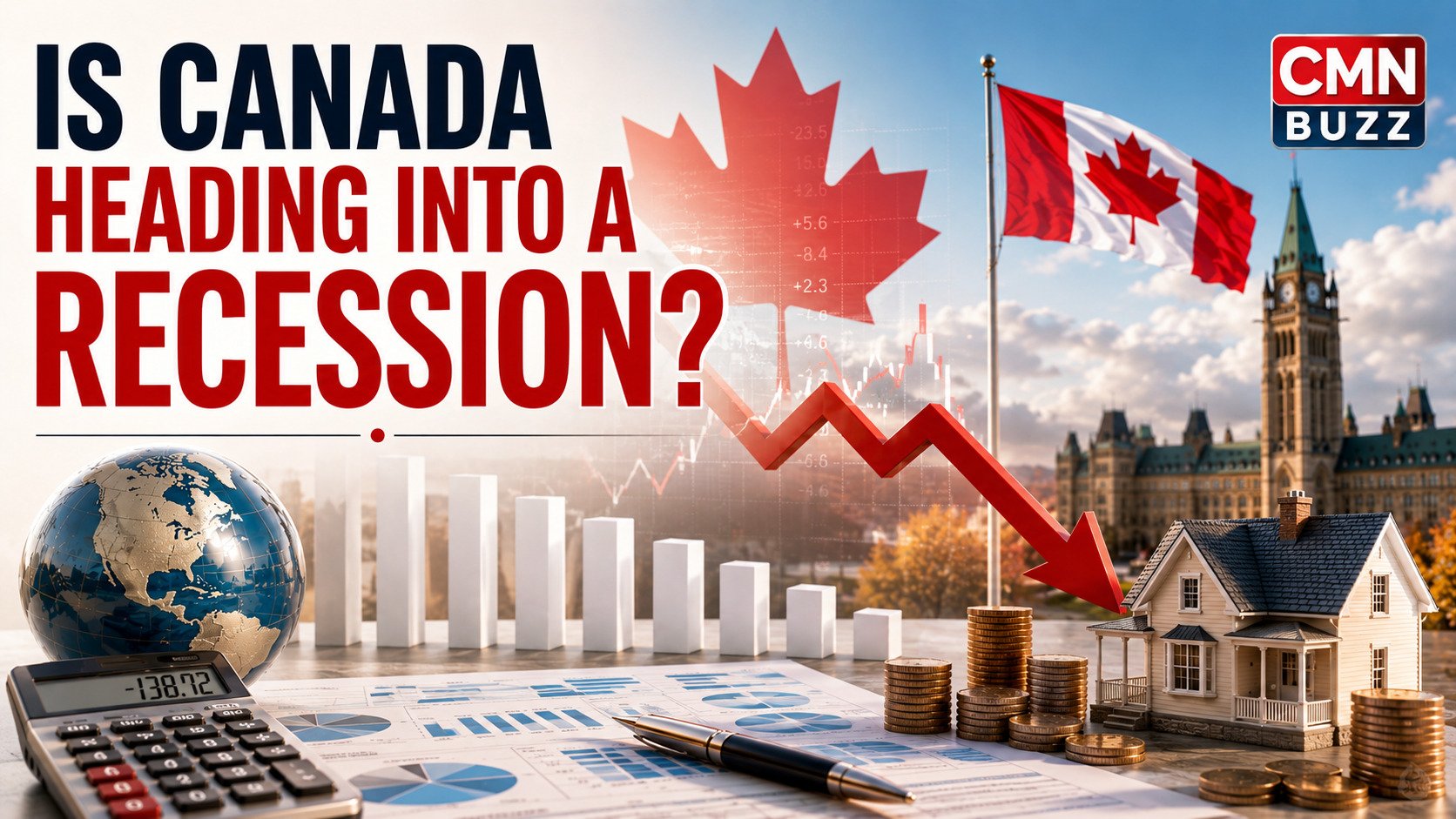
Canada’s economy has become the focus of national debate after new economic data showed two consecutive quarters of declining GDP, meeting the technical definition of a recession. While politicians are arguing over what the numbers mean and who is responsible, many Canadians are asking a more practical question: How will this affect jobs, housing, interest rates, businesses, and everyday life?
The answer is more complex than a simple yes or no. Although recent figures indicate economic contraction, economists, policymakers, and financial institutions are still debating whether Canada is experiencing a broad-based recession or a temporary slowdown influenced by unusual economic factors.
This guide explains what a technical recession means, how Canada arrived at this point, and what Canadians should watch in the months ahead.
What Is a Technical Recession?
A technical recession occurs when a country’s Gross Domestic Product (GDP) declines for two consecutive quarters.
GDP measures the total value of goods and services produced within a country. When GDP shrinks over multiple quarters, it signals that economic activity is slowing.
However, economists often emphasize that GDP alone does not tell the entire story. Employment levels, consumer spending, wage growth, business investment, and household finances also play important roles in determining the overall health of an economy.
This is why some experts caution against treating the term “technical recession” as a complete description of Canada’s economic situation.
Why Canada’s Economy Has Slowed
Several factors have contributed to weaker economic growth.
High Interest Rates
Over the past few years, higher interest rates increased borrowing costs for households and businesses. Mortgage payments became more expensive, consumer spending slowed, and companies became more cautious about investing and hiring.
Cost-of-Living Pressures
Many Canadians continue to face high costs for housing, groceries, insurance, utilities, and transportation. As households devote more income to essential expenses, discretionary spending often declines, reducing economic activity.
Slower Consumer Spending
Consumer spending is one of the largest drivers of economic growth. When families cut back on purchases due to financial uncertainty, businesses often experience lower sales and reduced revenue.
Business Caution
Companies tend to delay expansion plans during periods of economic uncertainty. Hiring freezes, slower investment, and reduced capital spending can further weaken growth.
Why Some Economists Are Urging Caution
Despite the GDP figures, many economists argue that the situation may not resemble a traditional recession.
Historically, recessions often involve widespread job losses, severe declines in consumer confidence, falling incomes, and significant business closures.
Canada’s current situation presents a more mixed picture. Certain sectors continue to experience labor shortages, and employment levels remain stronger than many economists would normally expect during a severe recession.
Some analysts have also suggested that specific trade and inventory factors may have influenced recent GDP data, potentially exaggerating the appearance of economic weakness.
As a result, many experts believe Canadians should monitor multiple indicators rather than focusing solely on the recession label.
What This Means for Canadian Workers
Workers are often among the first groups to worry when recession headlines appear.
A slowing economy can affect employment in several ways:
- Reduced hiring activity
- Slower wage growth
- Increased competition for available positions
- Delayed promotions and expansion opportunities
However, impacts are not always evenly distributed.
Healthcare, skilled trades, transportation, logistics, and certain public sector occupations may continue to experience demand even during periods of slower growth.
Workers in industries heavily dependent on consumer spending may face greater uncertainty if economic conditions weaken further.
What It Means for International Students and Newcomers
International students and newcomers often feel economic changes more quickly because they are still establishing themselves in the Canadian labor market.
A weaker economy can create challenges such as:
- More competition for entry-level positions
- Longer job search periods after graduation
- Reduced availability of part-time employment
- Greater pressure on housing affordability
At the same time, Canada continues to face labor shortages in many essential sectors. Healthcare, construction, engineering, transportation, and skilled trades remain important areas of demand across several provinces.
For newcomers, building relevant skills and gaining Canadian work experience remain key strategies for navigating economic uncertainty.
What Could Happen to Interest Rates?
Interest rates remain one of the most important factors affecting Canadian households.
If economic growth remains weak for an extended period, policymakers may face increasing pressure to support economic activity.
Lower interest rates can:
- Reduce borrowing costs
- Improve mortgage affordability
- Encourage business investment
- Support consumer spending
However, central banks must balance economic growth against inflation risks. Any future rate decisions will depend on broader economic conditions rather than GDP data alone.
Homeowners, prospective buyers, and investors should continue monitoring interest-rate announcements closely.
Housing Market Implications
The housing market often responds to changes in both economic growth and interest rates.
A slower economy can reduce buyer confidence and limit housing demand. At the same time, lower borrowing costs can encourage more market activity if interest rates decline.
As a result, housing outcomes are not always predictable during economic slowdowns.
Factors influencing the market include:
- Mortgage rates
- Population growth
- Immigration levels
- Housing supply
- Regional economic conditions
Different cities and provinces may experience very different housing trends even under the same national economic environment.
Impact on Small Businesses
Small and medium-sized businesses frequently face additional pressure during periods of slower economic growth.
Common challenges include:
- Reduced consumer spending
- Higher operating costs
- Increased financing expenses
- Lower profit margins
Businesses that depend heavily on discretionary consumer purchases may be particularly vulnerable if households become more cautious with spending.
Companies that adapt quickly, manage expenses carefully, and maintain strong customer relationships often perform better during uncertain economic periods.
The Political Debate
Economic data has also fueled political disagreements.
Government leaders argue that current challenges must be viewed within a broader long-term strategy designed to strengthen Canada’s economic resilience and competitiveness.
Opposition leaders argue that affordability challenges and slowing growth demonstrate policy failures that are affecting ordinary Canadians.
While political debates attract attention, the practical realities facing households often matter more than political messaging. Most Canadians are primarily concerned with affordability, employment opportunities, housing costs, and financial stability.
What Canadians Should Watch Next
Rather than focusing exclusively on recession headlines, several indicators may provide a clearer picture of Canada’s economic direction:
Employment Data
Strong employment numbers can indicate underlying economic resilience even during slower GDP growth.
Inflation Trends
Lower inflation can improve purchasing power and influence future interest-rate decisions.
Wage Growth
Rising wages help households manage higher living costs and support consumer spending.
Consumer Confidence
Confidence levels often influence spending behavior and future economic activity.
Business Investment
Business expansion and hiring plans can signal expectations about future growth.
Practical Steps for Households
Periods of economic uncertainty often encourage Canadians to review their financial plans.
Consider:
- Building or strengthening emergency savings
- Reducing high-interest debt
- Monitoring mortgage renewal timelines
- Expanding professional skills and certifications
- Maintaining flexibility in household budgets
Preparation can help families navigate both temporary slowdowns and longer economic challenges.
The Bottom Line
Canada’s latest GDP figures meet the technical definition of a recession, but the broader economic picture remains more nuanced. Employment trends, consumer spending, inflation, business investment, and interest-rate decisions will ultimately determine whether the country experiences a deeper downturn or a temporary slowdown.
For most Canadians, the most important questions are not political—they are practical. The months ahead will reveal whether economic weakness spreads through the broader economy or whether Canada stabilizes and returns to stronger growth.
Understanding the indicators, staying financially prepared, and focusing on long-term planning remain the most effective ways to navigate uncertainty regardless of what label economists ultimately apply to the current economic environment.
For a Malayalam news perspective on this topic, read the full report here.
Bastian | CMN BUZZ
Editorial Team
Share your thoughts and questions about this news in the comment box below. For more information, visit our website or email us at cmnbuzzcanada@gmail.com. Follow CMN Buzz on social media to stay updated with all major news from Canada in real-time.
Stay tuned to CMN Buzz — Your trusted partner for news that shapes the future of immigrant life in Canada